
What Is Matrescence and Why Every Mother Needs This Word
I thought motherhood would change my schedule. I did not realize it would change me. When I became a mother for the first time in 2015, I was completely unprepared for what happened next.
I had not anticipated how deeply motherhood would reshape my sense of self.
My identity had been deeply tied to achievement and work. That was where I found my sense of worth and value. I was always taught not to settle. To work hard. To achieve. To give my best to everything I cared about.
So when I became a mother, I wanted to work like I was not a mother and mother like I did not work. And I felt like I was failing at both.
For many ambitious women who are used to performing well and staying in control, motherhood can feel profoundly destabilizing. It introduces a level of uncertainty, surrender, and emotional complexity that many of us have never encountered before. It took years before I found the word that changed everything.
Matrescence.
The Word Most Mothers Have Never Heard
Matrescence is the complete psychological, emotional, social, physical, economic, cultural, and spiritual transformation a woman moves through as she becomes a mother.
It was first coined in 1973 by anthropologist Dana Raphael, the same woman who gave us the word doula. One became mainstream. The other remained hidden in academic circles for decades.
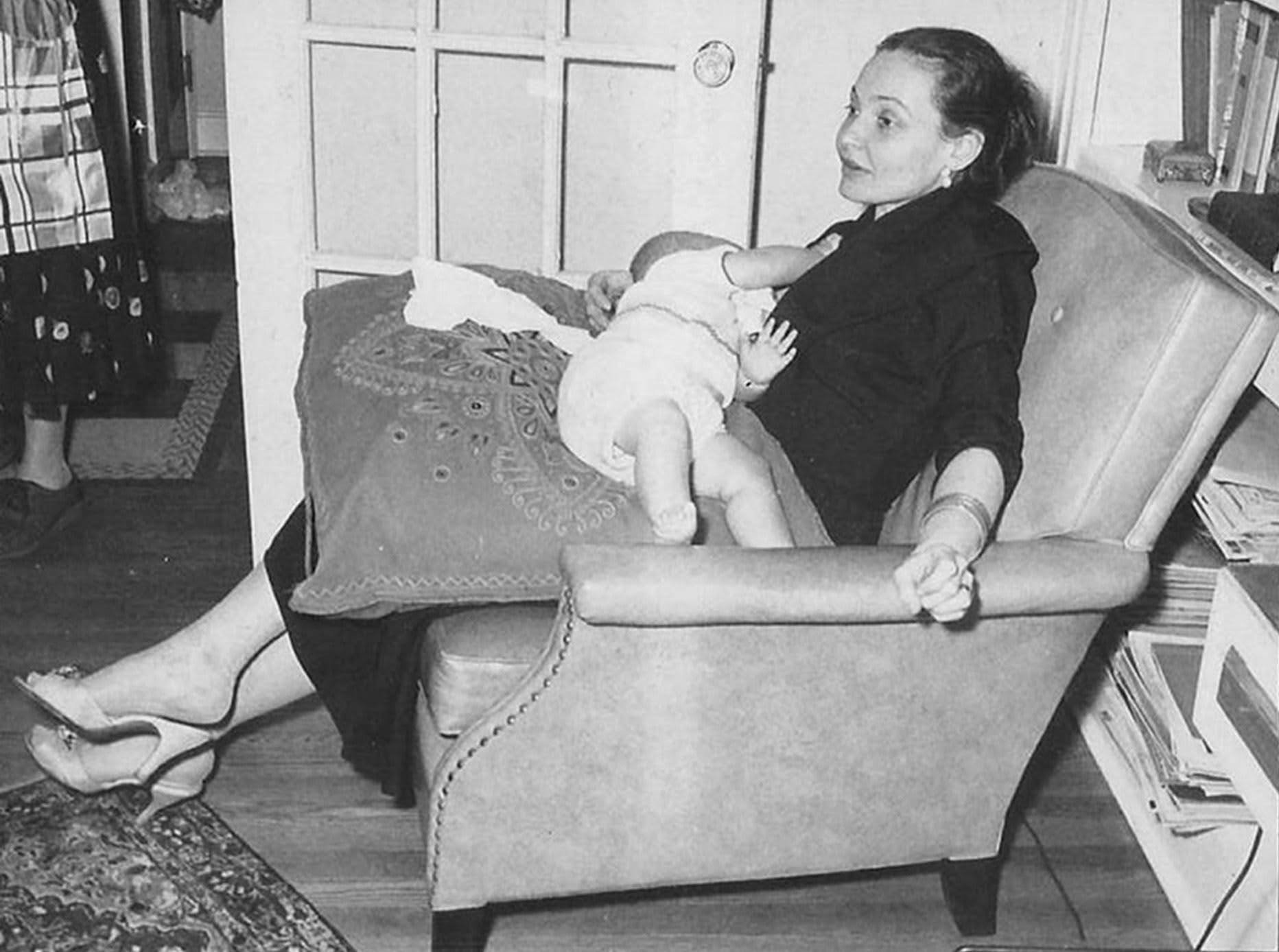
Dr. Aurélie Athan, a clinical psychologist and faculty member at Columbia University, brought matrescence back into wider conversation in the early 2000s. She reframed it as a developmental transition as significant as adolescence and expanded its definition to include every pathway into motherhood, from pregnancy and birth to surrogacy, adoption, IVF, and pregnancy loss.

She writes that women moving through motherhood experience an acceleration across every domain of development: biological, psychological, social, cultural, and spiritual.
Today, 67% of mothers have still never heard the word matrescence. Millions of women are moving through one of the most significant transitions of adult life without a name for what they are experiencing.
The Inner Split
One of the most powerful concepts within matrescence is the inner split.
When we become mothers, many of us feel it: the tension between who we once were and the mother we are becoming. The old identity no longer fully fits, and the new one has not yet taken shape.
Without language for this, the experience turns inward. It becomes guilt. Perfectionism. Resentment. Burnout. The relentless pressure to hold everything together while quietly wondering why it feels so hard.
What most women need is not more pressure to do motherhood better. We need language and understanding for the transformation itself. Moving from split to whole takes time, self-compassion, and support.
Matrescence is the ongoing process of moving from split to whole.
And because matrescence touches every dimension of life at once, the experience can feel all-consuming.
Why It Feels So Overwhelming
Matrescence does not arrive in one dimension. It arrives in all of them simultaneously.
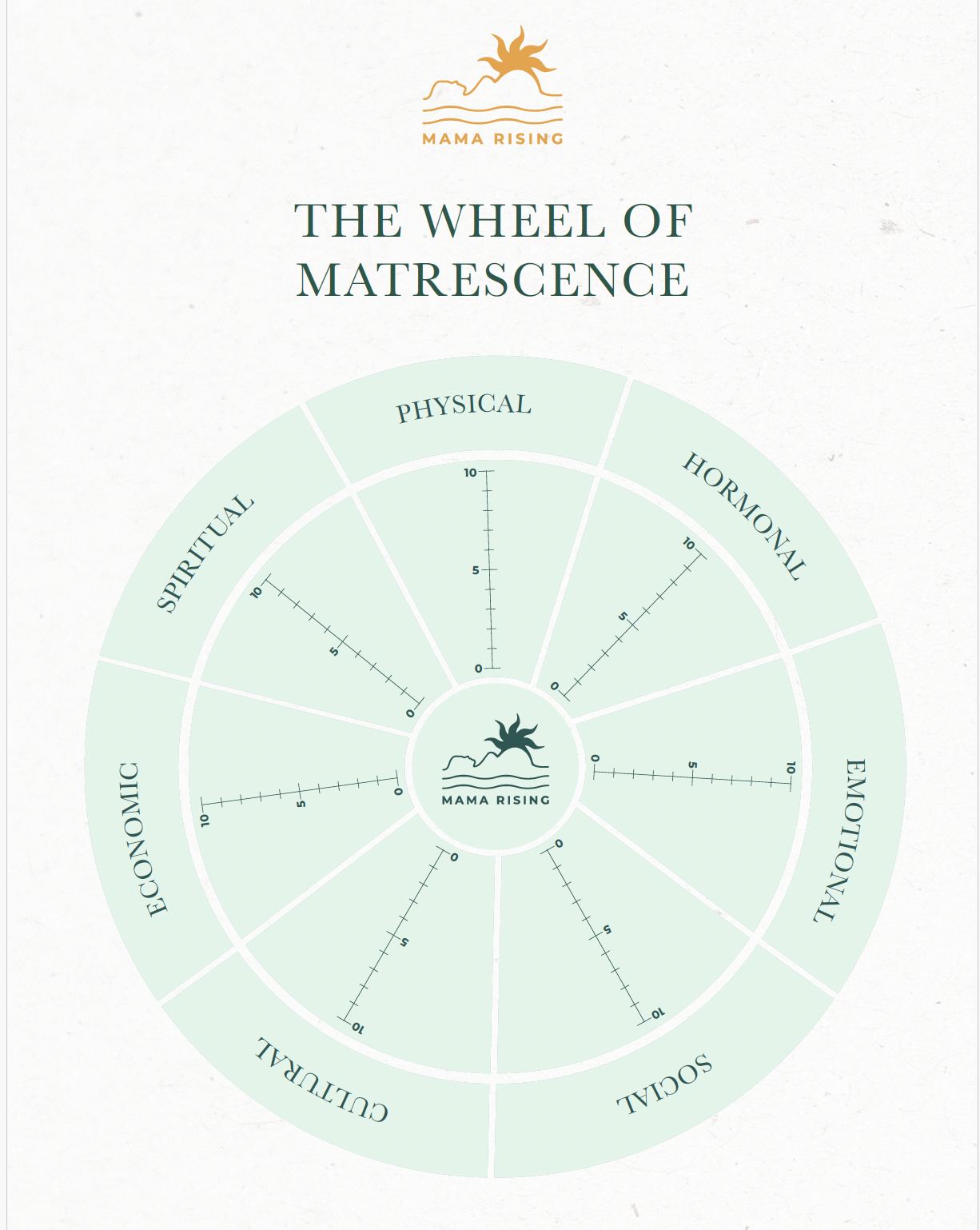
Physically, the brain and body change. Research from UC Santa Barbara shows that the maternal brain rewires through motherhood, with changes in gray and white matter connected to empathy, bonding, and social processing. Add sleep deprivation, hormonal recovery, physical exhaustion, and the relentless demands of caregiving, and you begin to understand why early motherhood can feel so destabilizing.
Emotionally, many women experience guilt, overwhelm, anxiety, and what matrescence educators call maternal ambivalence: holding two contradictory truths at the same time. Deeply loving your child, while also grieving parts of your old life, needing space, or feeling overwhelmed. Both things are true. Both are normal.
Socially, friendships shift. Independence changes. Many women begin searching for a deeper kind of community, one that can hold both the mother and the self still evolving alongside her.
Culturally, motherhood brings new awareness to how society values caregiving and what it demands of women. The unspoken expectation that a good mother is endlessly selfless, constantly present, and naturally fulfilled is one of the most quietly influential expectations surrounding modern motherhood.
Economically, the costs are real. Career pauses, childcare expenses, workplace penalties, and the motherhood wage gap shape the lives of millions of women in ways that compound over time.
Spiritually, something deeper begins to move. Many women experience a shift from “me” to “we.” Values reorganize. Questions of meaning, contribution, and purpose begin to surface in new ways. There can be a letting go of old identities, a redefining of priorities, and a growing desire to build a better future not only for ourselves, but for our children.
Many women feel pulled toward work that feels more mission-driven and aligned because the stakes feel different now. One mother described it simply: “If I am going to spend time away from my son, I want it to be for something that makes him proud of me.”
It is a tremendous amount of change to carry. And most of it happens without acknowledgment, without support, and without recognition.
Matrescence borrows from adolescence because like adolescence, it brings identity upheaval, hormonal change, and a profound unfamiliarity with yourself. The difference is that society expects adolescence to feel awkward and disorienting. Motherhood is expected to feel natural and fulfilling from the very first moment.
But motherhood is not only the birth of a child.
It is the birth of a woman the world has not yet fully met.
What Becomes Possible With Language
We hear so much about the birth of the baby. Almost nothing about the birth of the mother.
Women are taught how to prepare for labor, feeding, sleep schedules, and caregiving. But very few are prepared for the identity transformation motherhood can bring.
Understanding matrescence changes that. It reframes the disorientation, restlessness, and complexity of motherhood within the context of development. It gives women language for experiences they often carry silently and a way to relate to themselves with greater clarity and compassion.
Language shapes the worlds we are able to build. When we can name a transformation, we begin creating understanding, research, support systems, and community around it.
Without language, women often believe their struggle is personal. With language, they begin to understand they are moving through something profoundly human and widely shared.
This is what House of Maya was built to explore: bringing matrescence into the cultural conversation so mothers have the language, understanding, and support this transformation requires.
Because when a woman can name what is happening to her, something shifts.
She stops questioning herself.
And begins understanding the transformation unfolding within her.
References
Mama Rising. Matrescence Coach and Facilitator Training, International Coach Federation (ICF) 2025–2026.
University of California, Santa Barbara. “Pregnancy and Motherhood Reshape the Brain.” 2024. https://news.ucsb.edu/2024/021421/maternal-brain
